Your pinky finger placement changes more than you think. Pick the right one for your hand size and your swing.
What separates an interlocking grip from an overlap grip
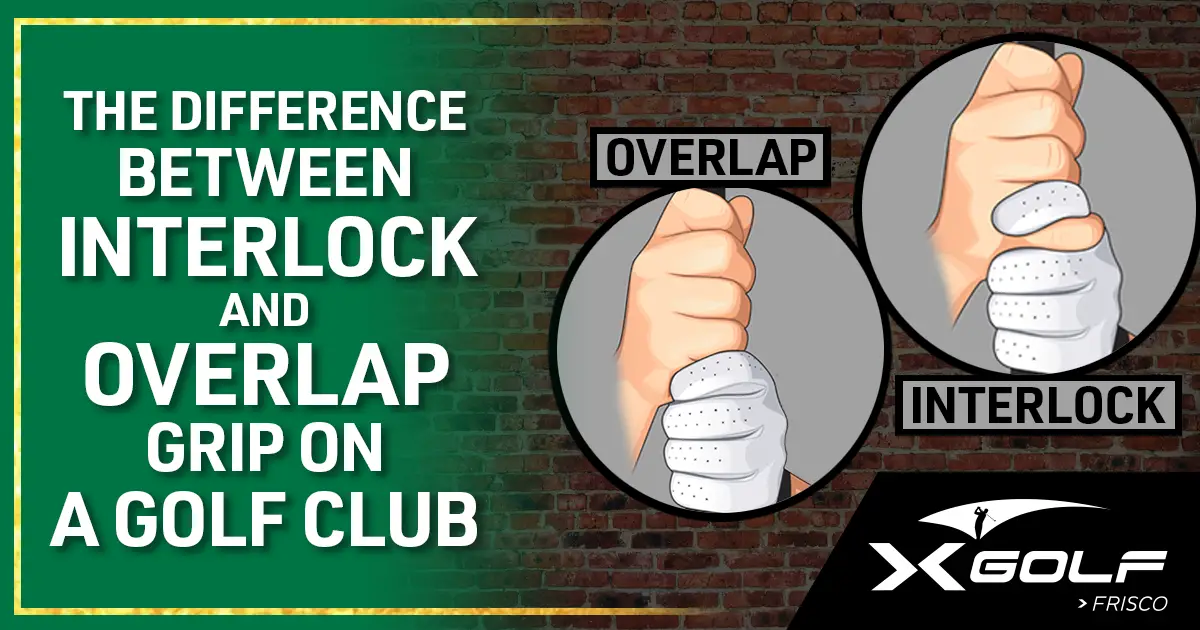
An interlocking golf grip weaves the pinky of your trail hand between the index and middle fingers of your lead hand. An overlap grip rests the trail hand’s pinky on top of the lead hand’s index finger instead. Both connect your hands as a unit, but interlocking locks them tighter while overlapping allows more wrist freedom.
Your trail hand is the one closer to the clubhead (the right hand for right-handed golfers). With an interlock, those two fingers physically thread together so your hands cannot separate mid-swing. With an overlap (also called the Vardon grip after Harry Vardon), the pinky sits on top, which gives your wrists a bit more hinge during the backswing.
Most golfers pick one of these two styles early and never reconsider it. But if you have played the same way for years and still fight the same miss, your finger placement could be part of the problem. If you are still building your golf grip from scratch, our fundamentals guide covers all three styles, including the 10-finger baseball grip.
What the pros actually use
Golf Digest ran a grip audit on the entire 2024 PGA Championship field and counted every player’s grip style. Out of 150+ competitors, 58.4% used an interlocking grip, 40.9% used overlap, and just 0.6% used baseball.
Tiger Woods, Jack Nicklaus, and Rory McIlroy all interlock. Phil Mickelson, Ben Hogan, and the grip’s namesake Harry Vardon went with overlap. Among American pros specifically, more than 60% chose interlock.
Neither grip gives you a built-in performance edge at the tour level. Both styles have produced major championships across every era of professional golf. The one you choose matters far less than how consistently you practice with it.
Pros and cons of each grip style
The overlap grip tends to work well if you want lighter hands and more wrist action:
- Naturally reduces grip pressure, which helps with tempo
- Gives your wrists more freedom to shape shots like a draw vs. fade
- Feels comfortable for golfers with larger hands and longer fingers
- Can feel less secure if your hands are small or your grip strength is low
The interlocking grip gives your hands a tighter physical bond on the club:
- Locks both hands together so they cannot slip apart during the swing
- Gives smaller hands more control over the clubface at impact
- Can increase clubhead speed because your hands work as one unit
- May encourage gripping too tight, which creates tension in your forearms
How hand size and grip pressure affect your choice
Measure from your wrist crease to the tip of your middle finger. Hands under 7 inches generally get better control from interlocking, while hands over 8 inches tend to feel more natural with overlap. Between 7 and 8, either style works, and personal feel matters more than the measurement.
Grip pressure plays an equal role in which style suits you. If you tend to strangle the club, overlap can help you loosen up because the pinky rests on top rather than wedging between fingers. If the club feels like it slides during your swing, interlocking adds security, and since a too-tight grip often causes a slice, getting this right can also help you stop slicing the golf ball.
Getting fitted for the right grip thickness on the actual club is worth doing before you commit to a style. A grip that is too thin forces you to squeeze harder no matter which finger placement you choose. Most pro shops and simulator facilities can measure your hand and recommend the right size in a few minutes.
How to test which grip works for you
Grabbing your driver on the range and switching grips is a recipe for frustration. Start with a short iron and follow this process instead:
- Take a 9-iron or pitching wedge and hit 20 to 30 half-swing shots with your current grip
- Switch to the other grip style and hit another 20 to 30 shots with the same club and tempo
- Compare where your misses go, not how far the good ones fly (consistency matters more than distance here)
- Once you pick a grip, stick with it across every club in your bag
At X-Golf Frisco, our simulators give you club path and spin data on every single shot. That feedback removes the guesswork from grip testing because you can see exactly how each style changes your ball flight in real time. Our instructors use the same data during golf lessons to help you find the grip that actually fits your swing.
Try your grip at X-Golf Frisco
Testing a grip change on a simulator gives you real numbers instead of a guess. You see data on every swing, grab a cold drink between rounds, and take your time without anyone waiting behind you. Book a tee time and find out which grip fits your game.
FAQ
Is the interlocking grip better for beginners?
Interlocking works well for beginners because it locks the hands together and prevents them from separating during the swing. That said, beginners with large hands may find overlap more comfortable right away. Try both during your first few range sessions and let comfort guide your choice rather than following a blanket recommendation about which grip suits new players.
Can I switch between interlock and overlap for different clubs?
Stick with one grip style across your entire bag. Switching between interlock and overlap for different clubs creates inconsistency in hand position, grip pressure, and timing. Your muscle memory builds around a single grip style, and mixing them resets that learning process every time you change clubs during a round.
How do I know if my golf grip is too tight?
Check for white knuckles at address, tense forearms before you swing, or restricted wrist movement during your backswing. On a scale of 1 to 10, aim for a pressure of about 4 or 5, firm enough to control the club but loose enough to let your wrists hinge naturally. An overlap grip can help reduce pressure if tension is an ongoing issue.